Quercus spp. of the family Fagaceae. Even if you totally discount the woods that have oak in one or more of their common names, but are NOT of the genus Quercus, there are, depending on who you listen to, between 300 and 900 varities of oak. I have the species name for 300 of them. Many of the differences are surely small and of interest mainly to botanists, but even so there are still a huge number of varieties that are of interest to woodworkers. Many varieties are posted on the Internet without sufficient information and those I put on this page. Also, some "trade names" or "marketing names" do not specify white or red or English Brown, or any of the normal categories, but instead focus on grain type ("ropey"). Those also end up on this page. Also, there are some well identified species for which I do not have enough samples to warrent their own page and they end up here as well.
my samples: NOTE: these pics were all taken in very bright incandescent lighting ("soft white" at 2700K) colors will vary under other lighting conditions
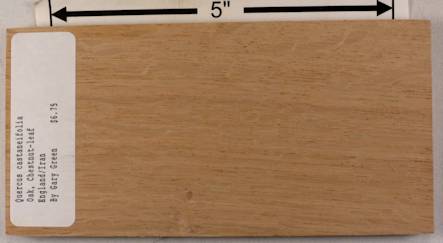
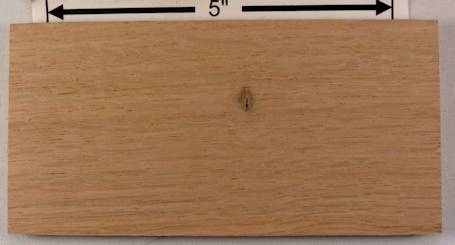
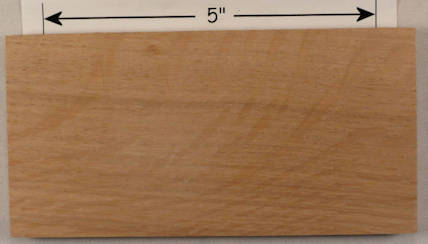
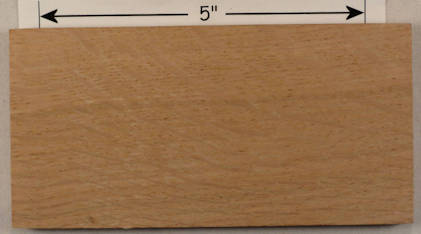
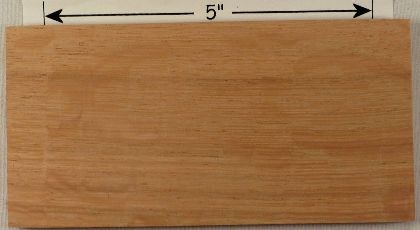
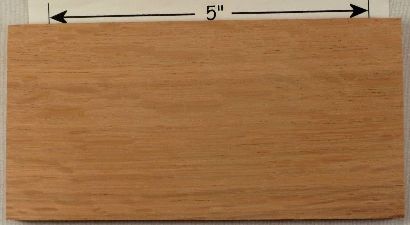
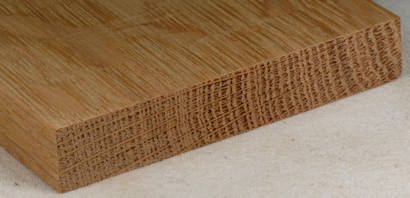
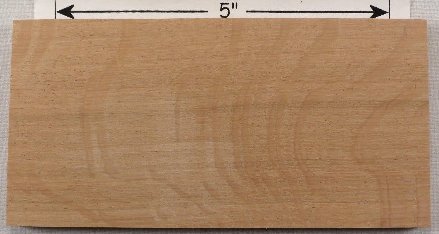
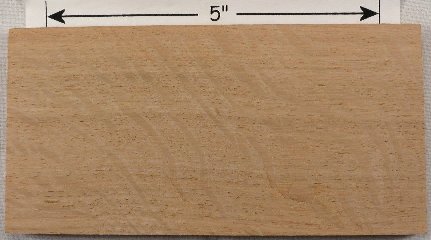
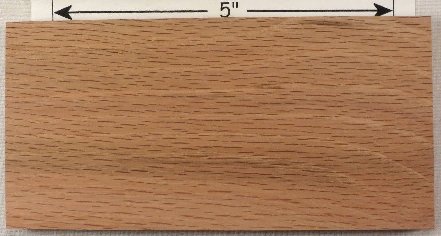
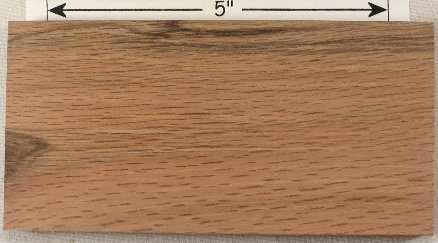
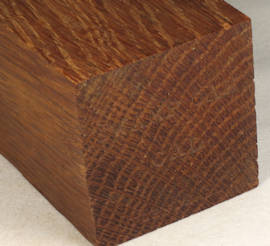
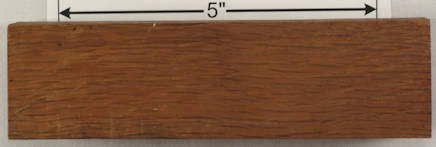
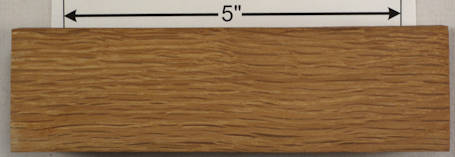
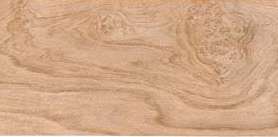
both sides of a sample plank of chestnut leaf oak / Quercus castaneifolia --- HUGE enlargements are present. This sample was loaned to me by David Clark whom I thank for this and other contributions to the site. This species grows in Iran, Turkey, and the Mediterranean region and is also known as Persian oak and as far as I know it does not grow in (or at least certainly is not native to) North America.
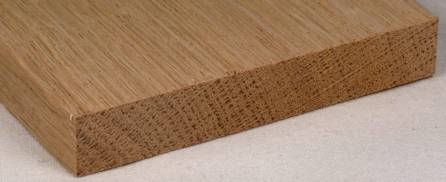
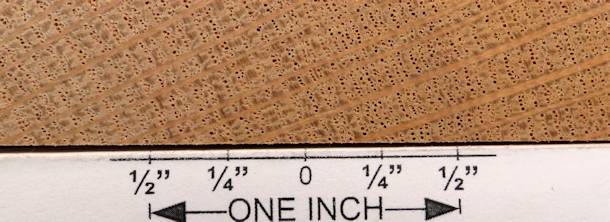
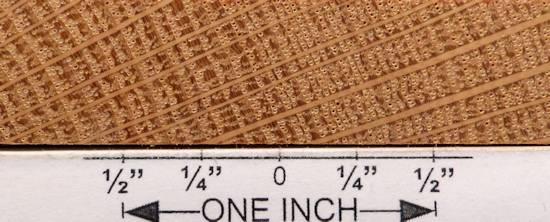
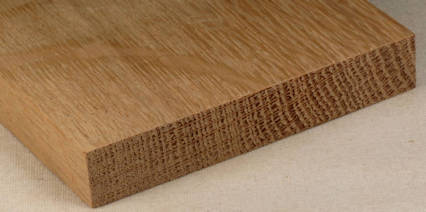
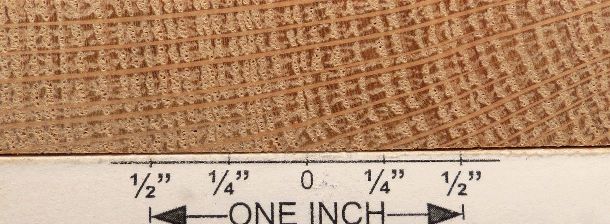
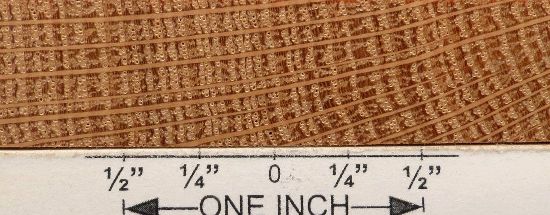
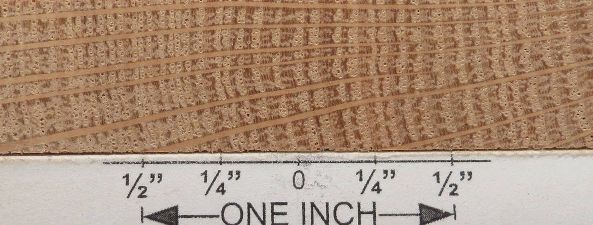
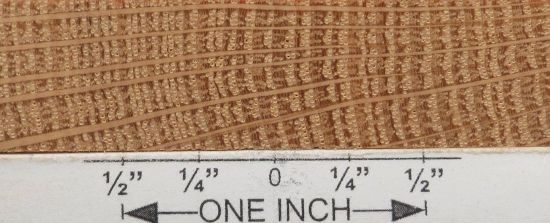
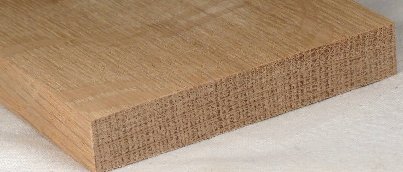
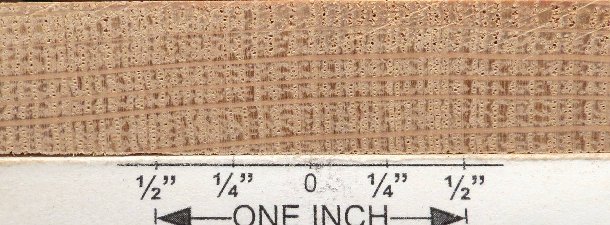
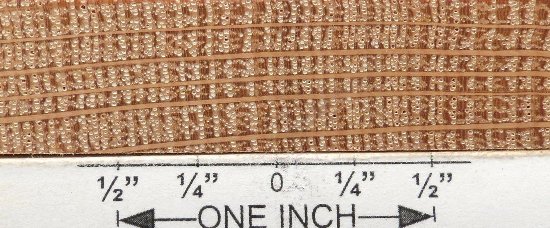
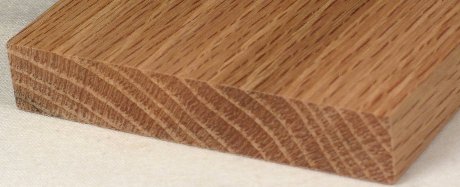
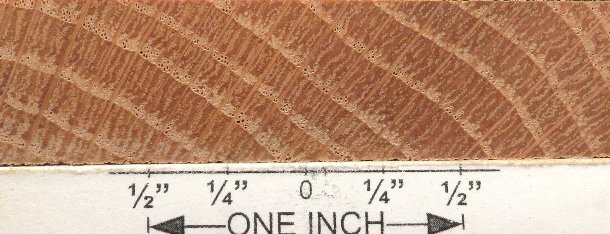
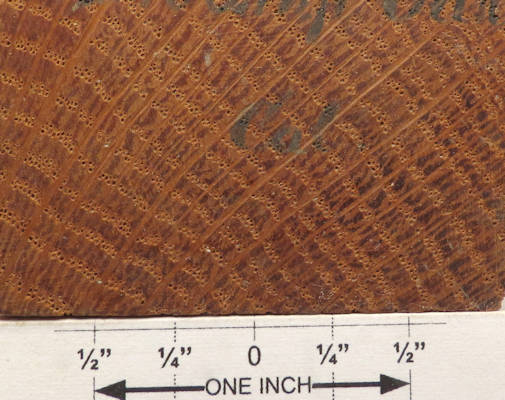
end grain and end grain closeup of the piece directly above
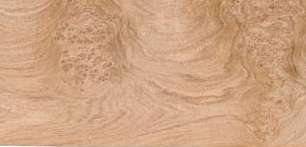
both sides of a sample plank of chestnut leaf oak / Quercus castaneifolia --- HUGE enlargements are present. This sample was loaned to me by David Clark whom I thank for this and other contributions to the site. The pics do not even begin to do justice to the ray flakes. This species grows in Iran, Turkey, and the Mediterranean region and is also known as Persian oak and as far as I know it does not grow in (or at least certainly is not native to) North America.
end grain and end grain closeup of the piece directly above
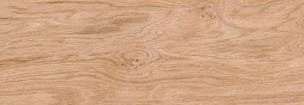
both sides of a sample plank of chestnut leaf oak / Quercus castaneifolia --- HUGE enlargements are present. This sample was loaned to me by David Clark whom I thank for this and other contributions to the site. This species grows in Iran and the Mediterranean region and is also known as Persian oak.
end grain and end grain closeup of the piece directly above
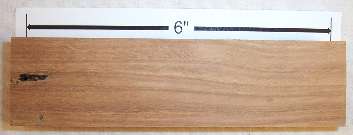
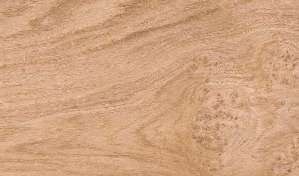
both sides of a sample plank of chestnut leaf oak / Quercus castaneifolia --- HUGE enlargements are present. This sample was loaned to me by David Clark whom I thank for this and other contributions to the site. This species grows in Iran and the Mediterranean region and is also known as Persian oak.
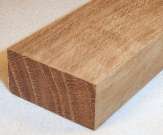
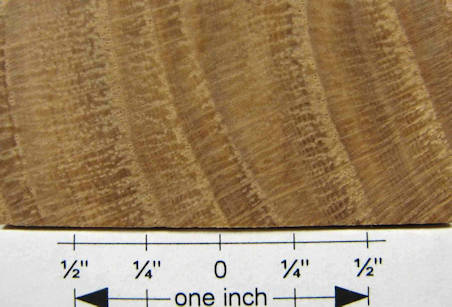
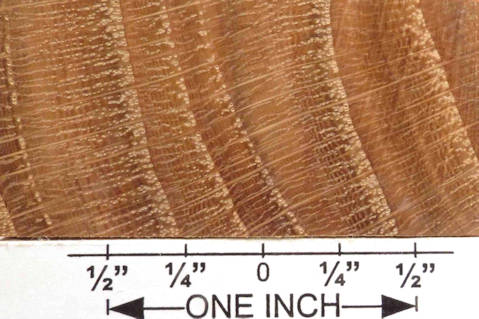
end grain and end grain closeup of the piece directly above
both sides of a sample plank of bluejack oak / Quercus incana --- HUGE enlargements are present. This sample was loaned to me by David Clark whom I thank for this and other contributions to the site.
end grain and end grain closeup of the piece directly above
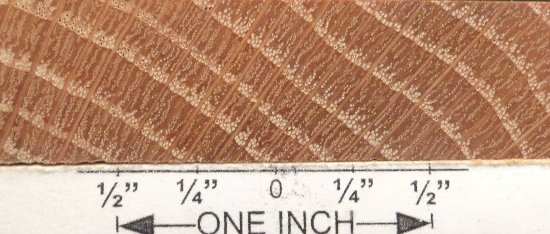
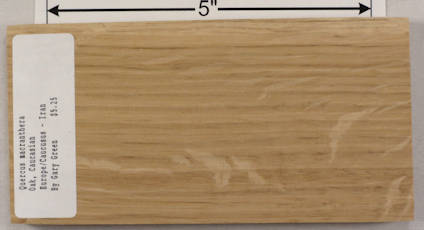
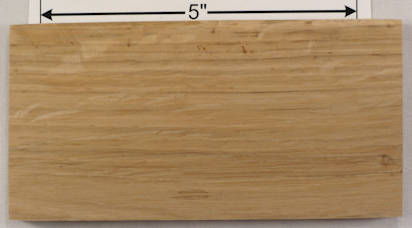
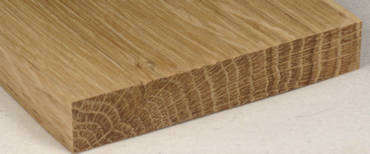
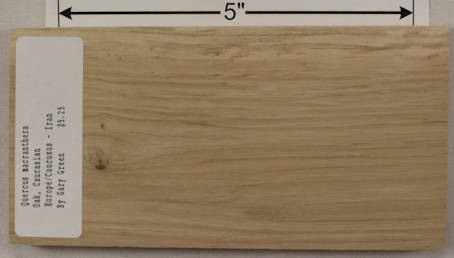
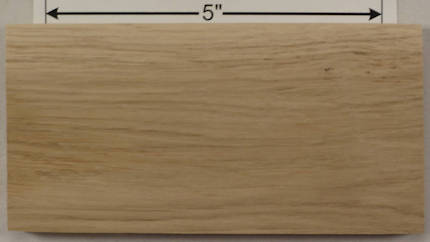
both sides of a sample plank of Caucasian oak / Quercus macranthera --- HUGE enlargements are present. This sample was loaned to me by Mark Peet whom I thank for this and other contributions to the site.
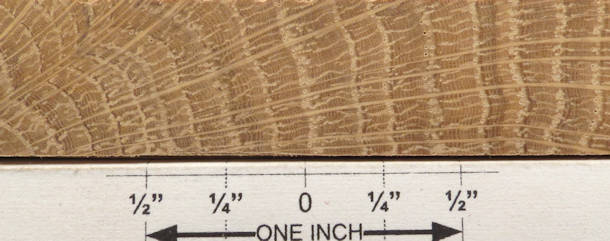
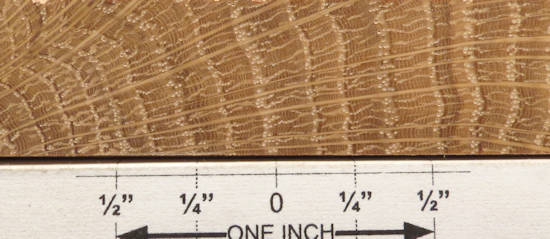
end grain and end grain closeup of the piece directly above
first face and the end grain of a sample listed as "Grand Island" oak. I don't know if that is where the sample was collected or was back then a common name for a particular species of oak. None of my reference show it and all I can tell from the end grain characteristics is that this is not a live oak. I'm pretty sure that I see tyloses in the pores which would make it a white oak, but I'm not 100% on that. This part of a collection which is discussed here: COLLECTION B
the second face, before and after slicing off 1/8" showing how the patina from aging is only surface deep.
first face and the end grain of a sample of swamp oak / Quercus spp. --- This part of a collection which is discussed here: COLLECTION C
the second face, before and after slicing off 1/8" showing how the patina from aging is only surface deep.
end grain closeup and END GRAIN UPDATE of the piece directly above
first face and the end grain of a sample of yellow oak / Quercus spp. --- This part of a collection which is discussed here: COLLECTION G. It is possible that this is black oak (aka Eastern black oak) / Quercus velutina in which case it should be on the black oak page, but since I can't be sure, I've left it here on the misc oak page.
the second face, before and after sanding it down a bit, showing how the patina from aging is only surface deep.
end grain closeup and END GRAIN UPDATE of the piece directly above
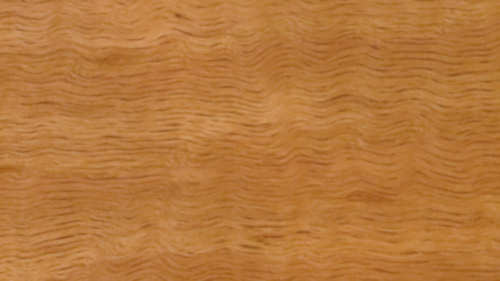
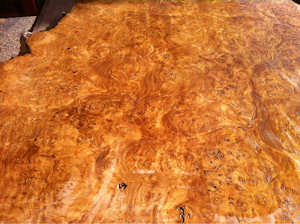
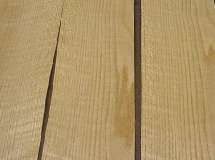
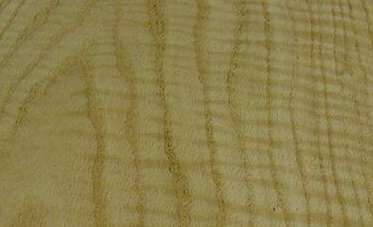
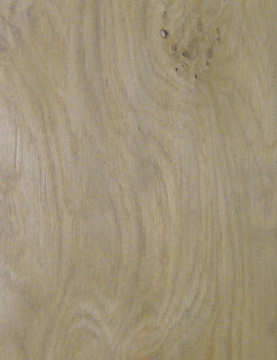
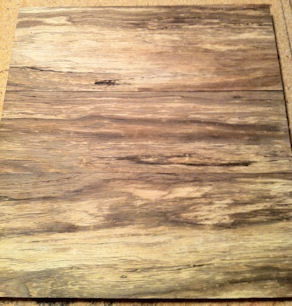
NOT a raw wood color a closeup of a finished slab table top, shot in a furniture store because of the interesting wavy grain. The pic was badly focused, unfortunately, so there are no enlargements. The color is yellowish because of the finish
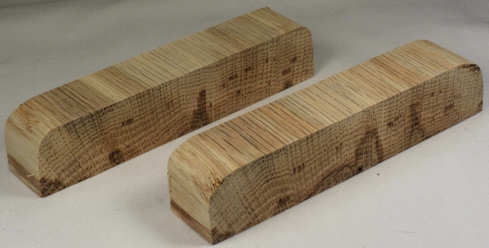
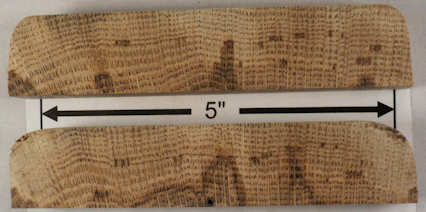
two little cut-offs of ambrosia oak contributed to the site by Rob Mathison whom I thank for this and other contributions. On both these pics and on the pics below, HUGE enlargements are present.
both faces of one of the pieces
end grain closeups of the pieces directly above
small piece and end grain. I got this piece before I knew much about wood and for some reason, clearly based entirely on ignorance, I had it as eucalyptus and it was on the site that way for years. I now know that it's an oak and based on the end grain it looks exactly like a piece of laurel oak that I have (which is a red oak) but I can't say for sure that that's what it is. I have no idea where I got it.
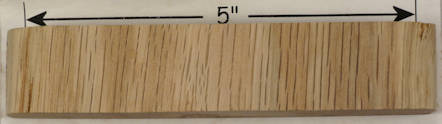
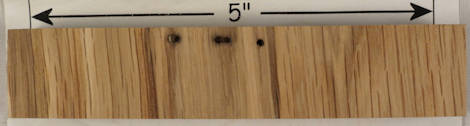
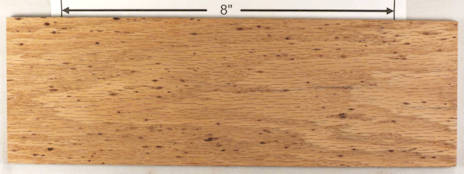
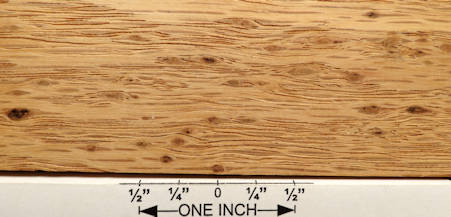
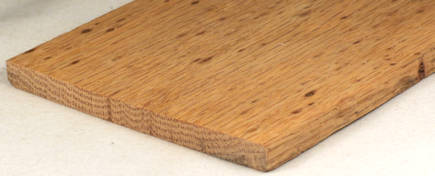
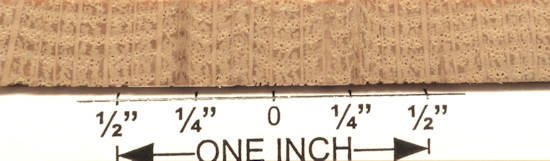
both sides of a piece of oak that has lots of SOMETHING (adventitious buds, embedded tiny branches, I don't know what) and whatever they are they take the form of enlarged, resinous rays that show up as dark spots on the face grain. This piece and the one directly below are from the same tree and were contributed to the site by Rob Mathison whom I thank for this and other contributions to the site.
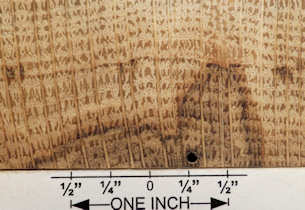
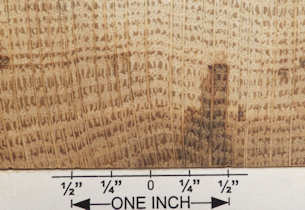
face grain and side grain closeups of the piece directly above
end grain and end grain closeup of the piece directly above
end grain closeup and END GRAIN UPDATE of the piece directly above
both sides of a piece of oak that has lots of SOMETHING (adventitious buds, embedded tiny branches, I don't know what) and is from the same tree as the piece directly above.
closeup of the face grain of the piece
end grain and end grain closeup of the piece directly above
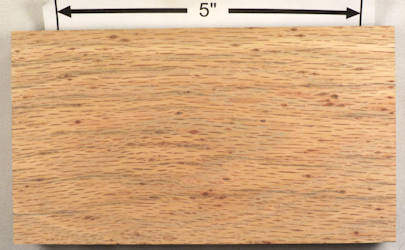
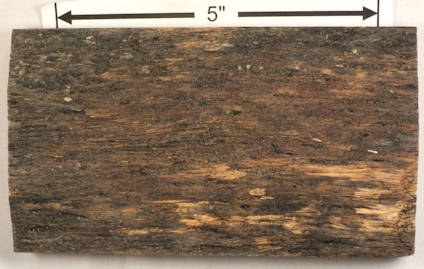
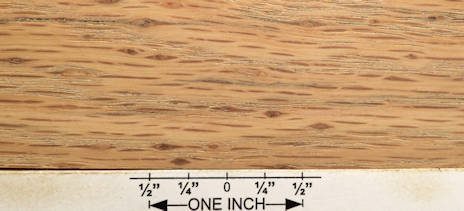
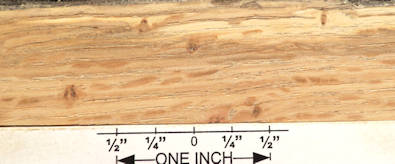
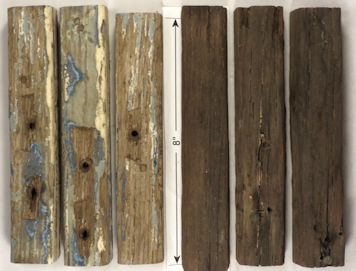
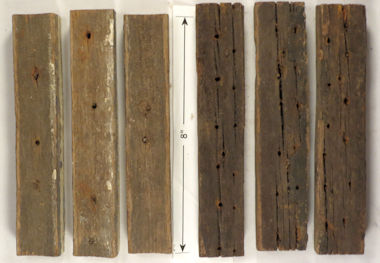
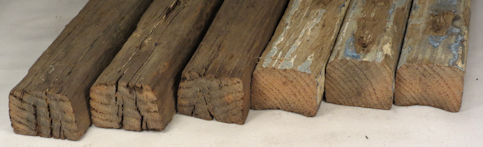
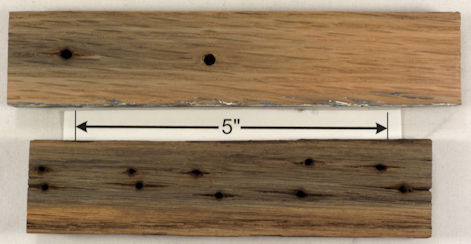
oak strips contributed to the site by Garry Painter, whom I thank. Gary got these off of a boat that he was reworking. The darker colored pieces are from the inside of the boat, where oxygen was more present and thus those pieces are more badly degraded than the dark pieces which ran along the bottom (outside) of the keel. Because these were used on a boat I assume that they are white oak, but since I did not verify the presence of tyloses in the pores, I've put them here on the misc page.
the end grain of the pieces and a closeup of a sanded face grain of one piece from each set
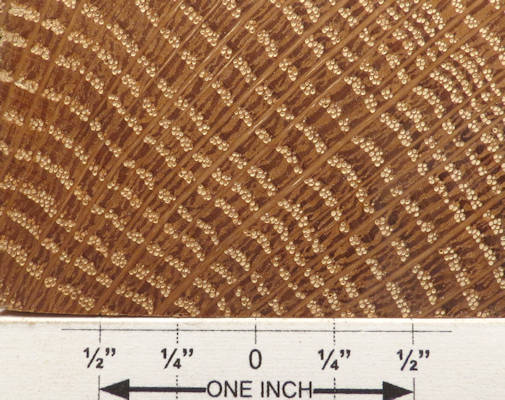
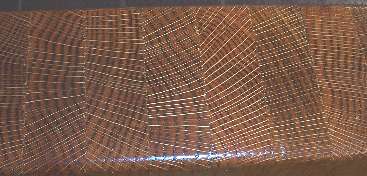
probably red oak but could be white. This is the butt end of a bunch of planks that have been glued together as part of a large bench in the Exchange Place PATH station in Jersey City, NJ --- this is the arm rest. Obviously treated with some finishing agent, this set of end grain shots really shows clearly how it is that the ray flakes occur in oak when the cut goes parallel to those light colored ray lines. It also shows clearly how the ray lines (very light color) are perpendicular to the grain lines (very dark color); this shows up even better in the enlargement.
flat cut, quartersawn, end grain
MacDonald oak (Quercus macdonaldi, which is a misspelling of Quercus macdonaldii) from The Wood Book --- both levels of enlargement are available for each of the 3 views. I don't know if this is a red oak or a white oak, so it's here with the miscellaneous oaks.
MISC OAK BY FIGURE NOT SPECIES
(OR BY UNKNOWN SPECIES, JUST "OAK")
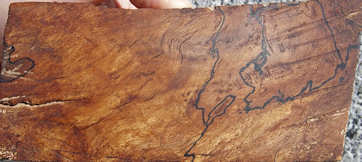
oak end grain with black-line spalting in the sapwood
rift cut plank with wet and dry sections, just listed as Quercus spp.
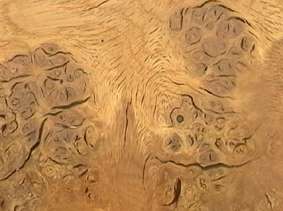
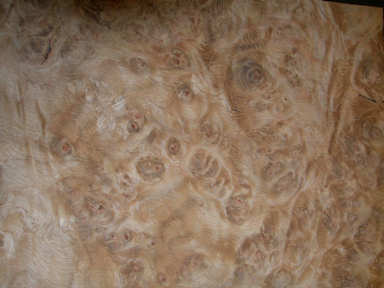
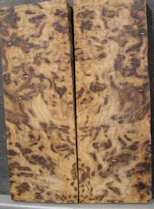
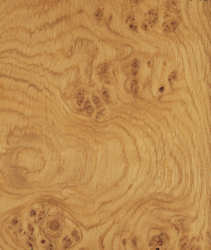
cluster burl
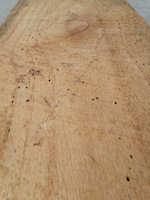
pippy planks
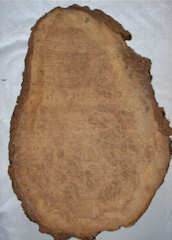
burl plank moistened for the pic
burl planks
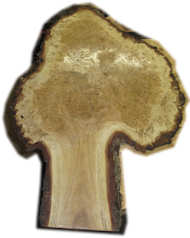
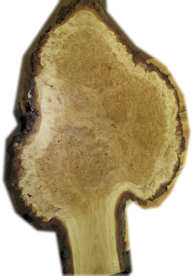
two views of an oak burl ... GIGANTIC enlargments are present and really show the burl eyes very nicely
oak burl plank with spalting and moistened for the pic
oak burl scales
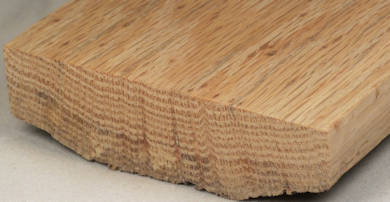
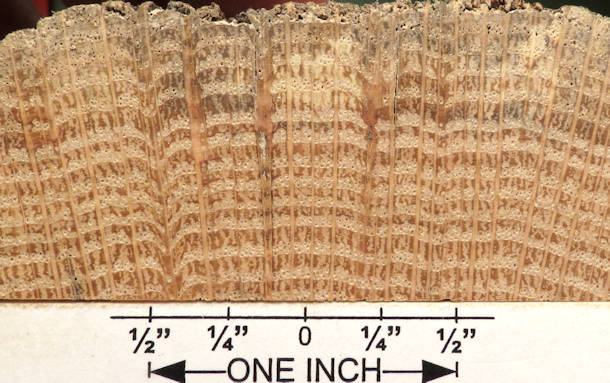
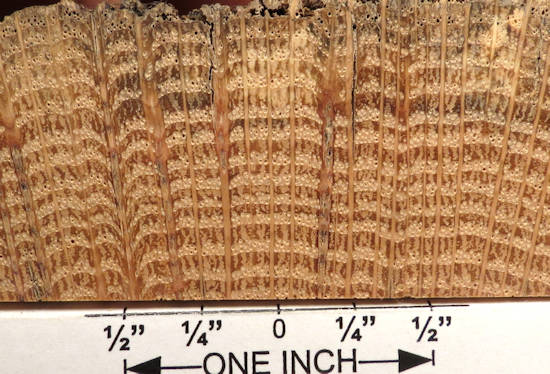
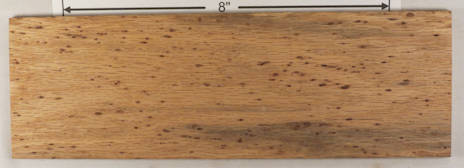
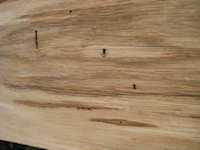
wormy oak planks ... that second one looks like ambrosia beetle stains
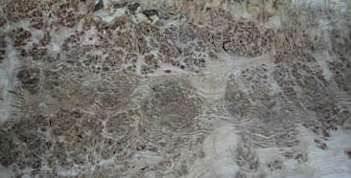
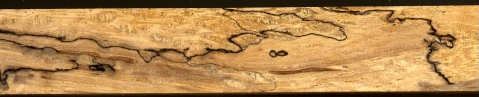
spalted oak plank
three bole end grains from sections of seriously spalted logs of Chinese cork oak / Quercus variabilis harvested in Taiwan and photographed by Byron Barker who owns them
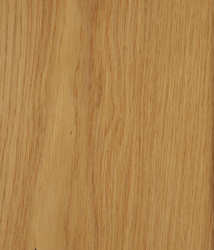
flat cut veneer
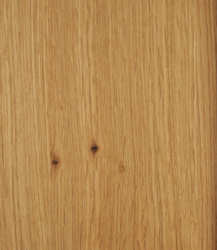
rift cut veneer
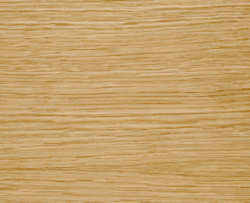
quartersawn veneer
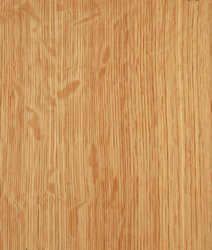
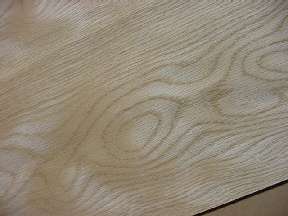
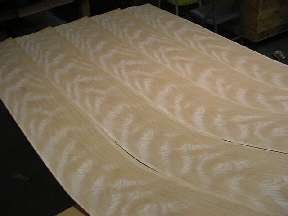
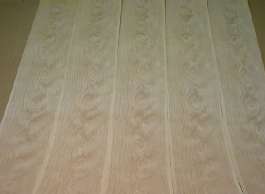
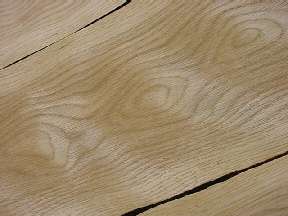
curly veneer
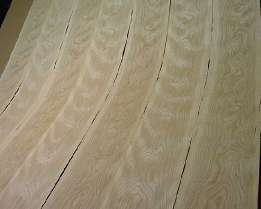
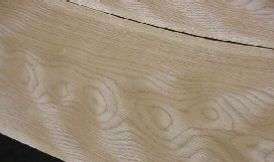
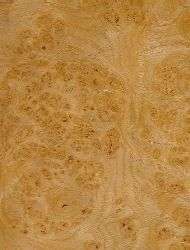
cluster burl veneer
pippy veneer
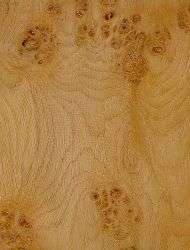
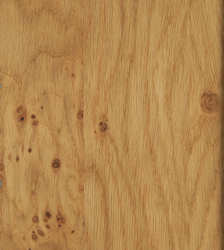
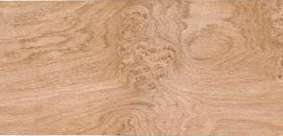
pippy veneer all from the same vendor (remember, "pippy", for some oak means "burl") --- the color is too pink, but that's typical of this vendor
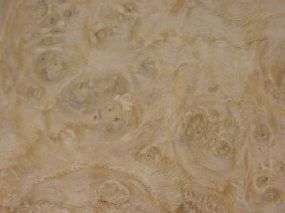
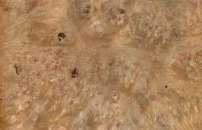
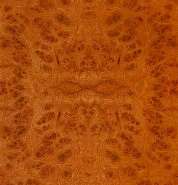
"pippy" (= "burl") sheet closeup with both enlargements
ropey veneer
burl veneer
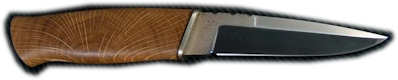
very nicely done end grain knife handle
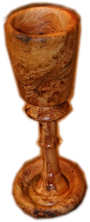
burl oak goblet with captive ring and a spalted oak bottle stopper
spalted oak, planks and bowl, no idea what species
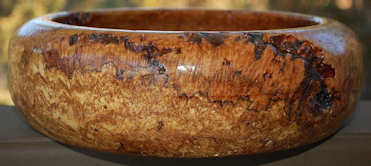
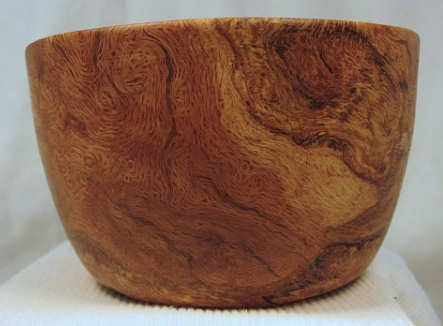
bowl listed as oak burl
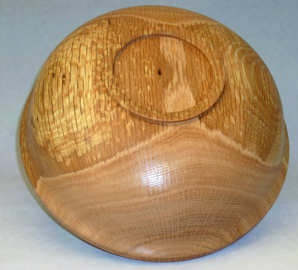
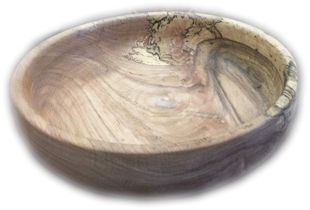
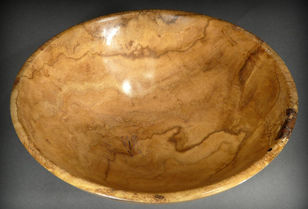
three views of a spalted (white rot) oak bowl
oak bowl showing black line spalting, white rot, and mineral stain
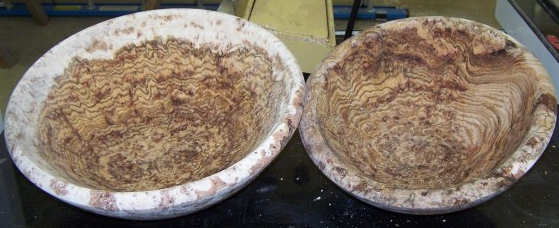
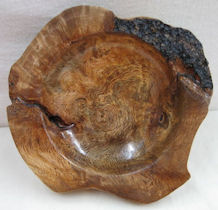
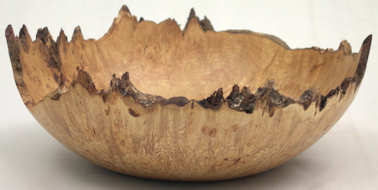
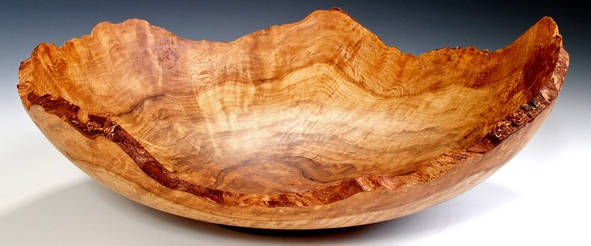
oak burl bowls, some with natural edge
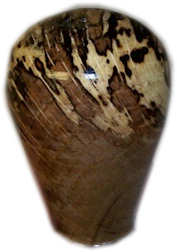
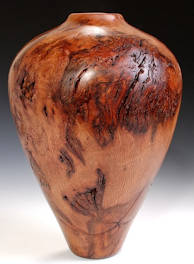
oak, burl vase
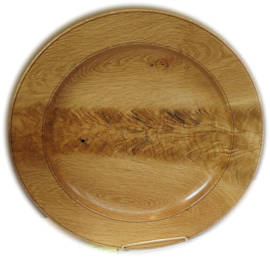
feather crotch oak platter shot at a wood shot. The finish was listed as antique oil. HUGE enlargements are present, nicely showing off the feather crotch.
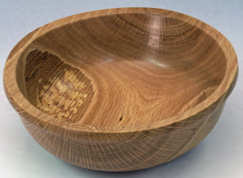
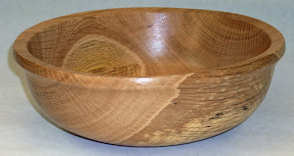
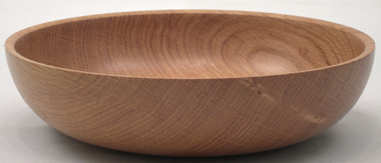
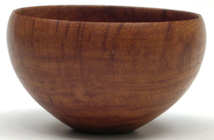
bowl just listed as oak
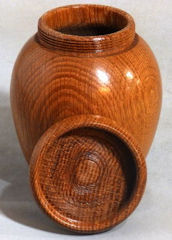
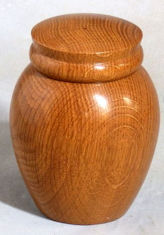
two views of a 4" tall oak jar
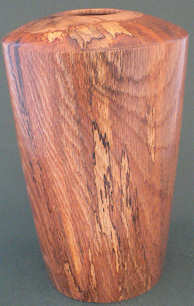
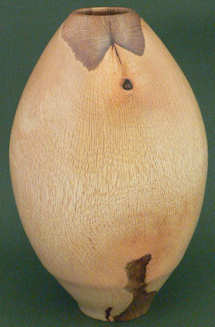
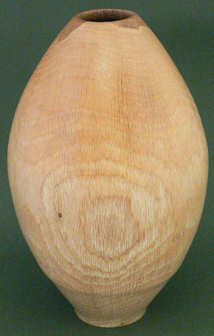
both sides of a vase listed as just oak; I'm not sure what the dark areas are. Both enlargements are present.
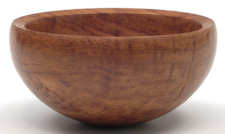
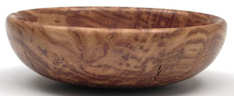
bowls listed as brown oak (probably English brown)
bowl listed as brown oak burl (probably English brown)
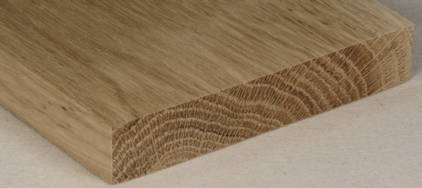
HOLLY OAK (Quercus ilex)
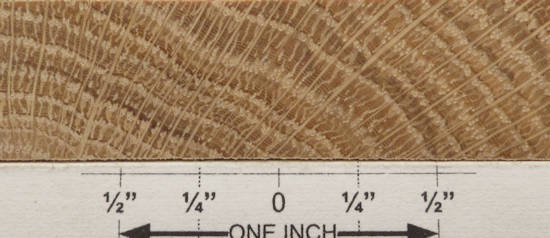
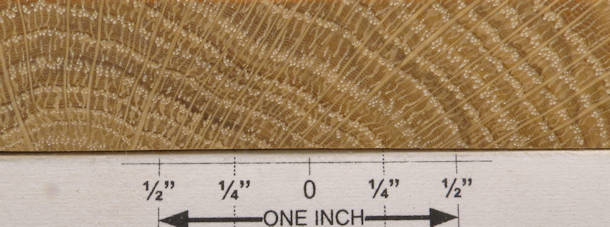
end grain listed as holly oak / Quercus ilex
planks listed as holly oak / Quercus ilex
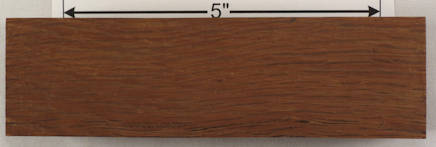
plank listed as European evergreen oak / Quercus ilex, but I'm doubtful about this one; it may be mis-identified
%201a%20s25%20plh.jpg)
%201%20end%20grain%20s25%20plh.jpg)
%201b%20s25%20plh.jpg)
%201c%20s25%20plh.jpg)
%201%20end%20grain%20closeup%20s25%20plh.jpg)
%201%20end%20grain%20closeup%202%20s25%20plh.jpg)
%201a%20s25%20plh.jpg)
%201%20end%20grain%20s25%20plh.jpg)
%201b%20s25%20plh.jpg)
%201c%20s25%20plh.jpg)
%201%20end%20grain%20closeup%20s25%20plh.jpg)
%201%20end%20grain%20closeup%202%20s25%20plh.jpg)
%20spalted%201a%20s50%20web.jpg)
%20spalted%201b%20s50%20web.jpg)
%20spalted%201c%20s50%20web.jpg)
%20s50%20web.jpg)
%20end%20grain%20web.jpg)
%201%20s50%20web.jpg)
%202%20web.jpg)
%204%20web.jpg)
%201%20web.jpg)