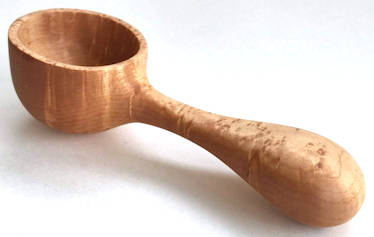
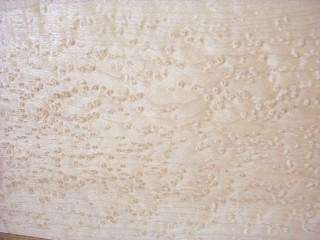
Acer spp. of the family Aceraceae. Native to North America. "Bird's eye" does not refer to a SPECIES of maple but to a FIGURE of maple, thus the "ssp." as the (NON)specific epithet. It seems to occur predominently in hard maple, specifically sugar maple (acer saccharum) but the USDA identifies other maples that can also get the figure. These include:
Acer campestre
Acer rubrum (red maple)
Acer mandschuricum (an Asian form of maple)
Acer platanoides (Norway maple)
Acer pseudoplatanus (harewood; called "sycamore" in England)
Other American species that can also get the figure are, according to the USDA:
white ash (Fraxinus americana)
black walnut (Juglans nigra)
Cuban mahogany (Swietenia mahagani)
American beech (Fagus grandifolia)
I have also seen it shown, rarely, on cherry, and anigre. A very similar figure is found on birch and is called masur birch or karelian birch.
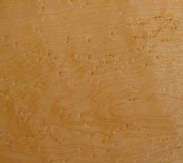
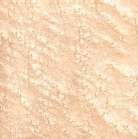
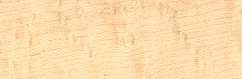
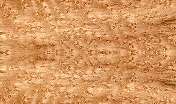
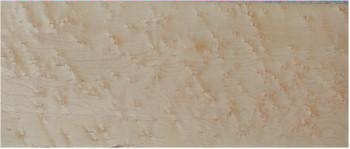
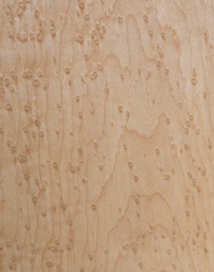
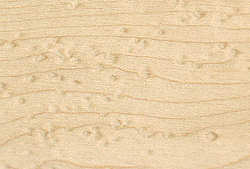
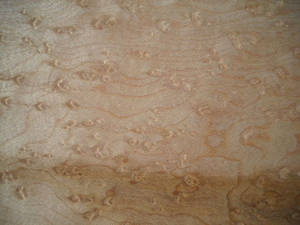
my samples: NOTE: these pics were all taken in very bright incandescent lighting ("soft white" at 2700K) colors will vary under other lighting conditions
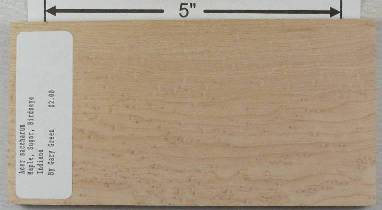
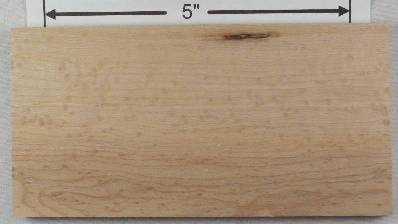
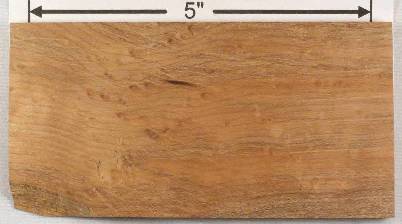
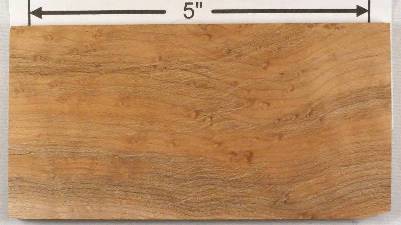
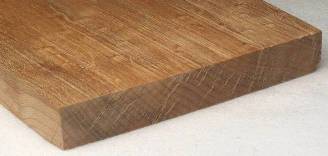
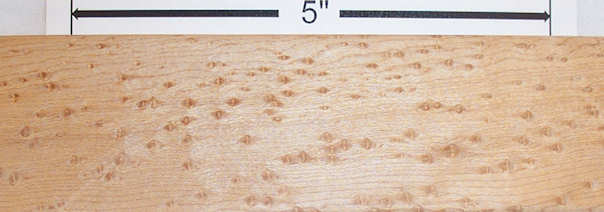
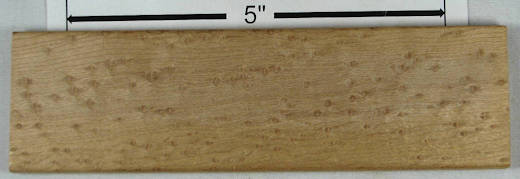
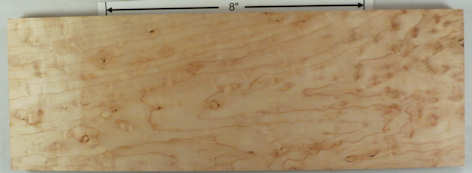
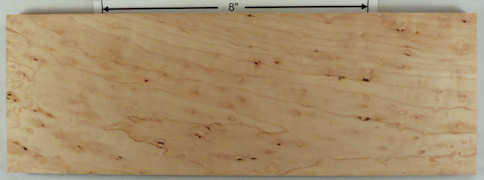
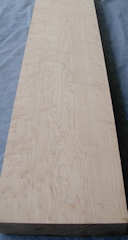
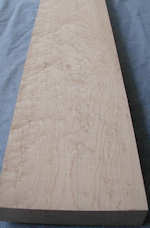
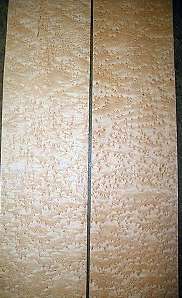
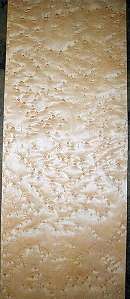
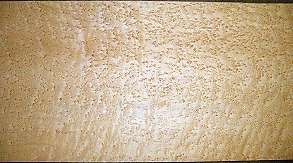
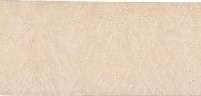
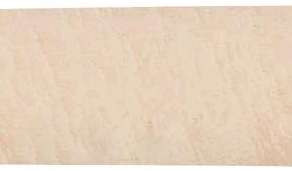
both sides of a sample plank of birdseye sugar maple / Acer saccharum --- HUGE enlargements are present. This sample was loaned to me by David Clark whom I thank for this and other contributions to the site.
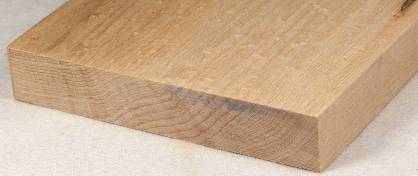
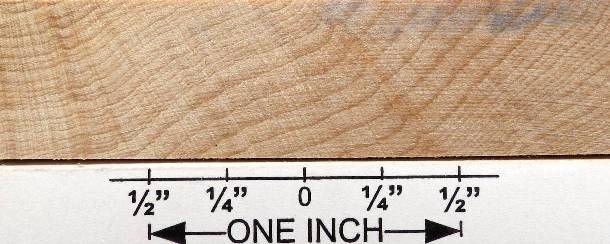
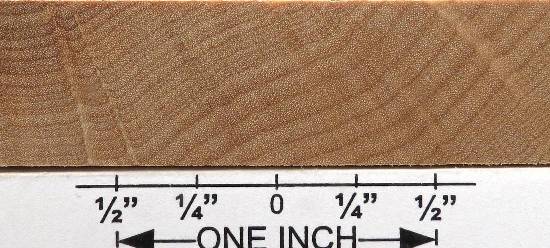
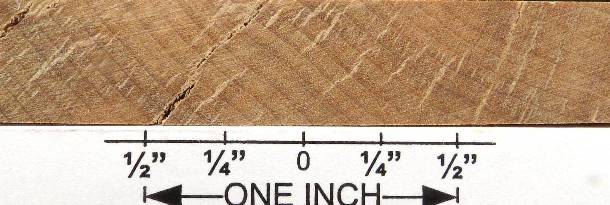
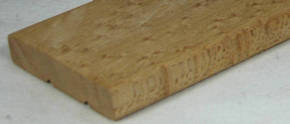
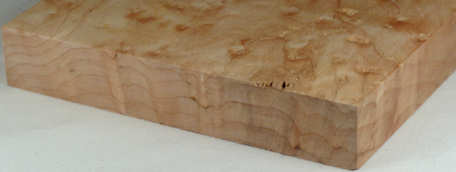
end grain and end grain closeup of the piece directly above
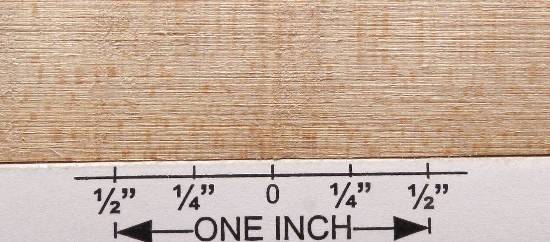
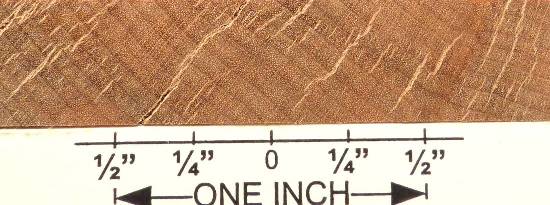
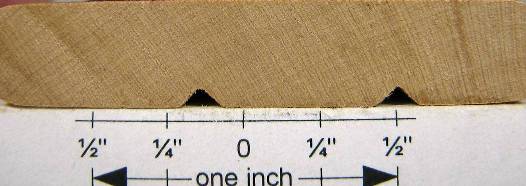
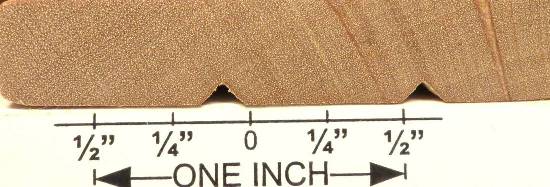
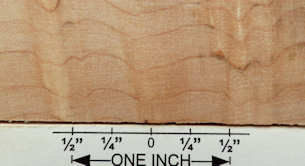
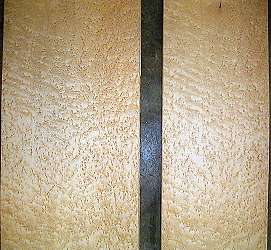
END GRAIN UPDATE and quartersawn side grain closeup from directly above. Although they are tough to see on this piece, even in the 2nd enlargment of the end grain update, there are rays and the side grain shot shows the accompanying flakes quite nicely. The vertical line in exactly the middle (where the scales shows "0") is a cross-section of one of the eyes running through the wood.
both sides of a sample plank of birdseye sugar maple / Acer saccharum --- HUGE enlargements are present. This sample was loaned to me by David Clark whom I thank for this and other contributions to the site.
end grain and end grain closeup of the piece directly above
END GRAIN UPDATE and a closeup of the side grain of the piece directly above. The side grain closeup shows the bird's eye" indentations from the side.
both sides of a sample plank of birdseye sugar maple / Acer saccharum --- HUGE enlargements are present. This sample was loaned to me by David Clark whom I thank for this and other contributions to the site.
end grain and end grain closeup of the piece directly above
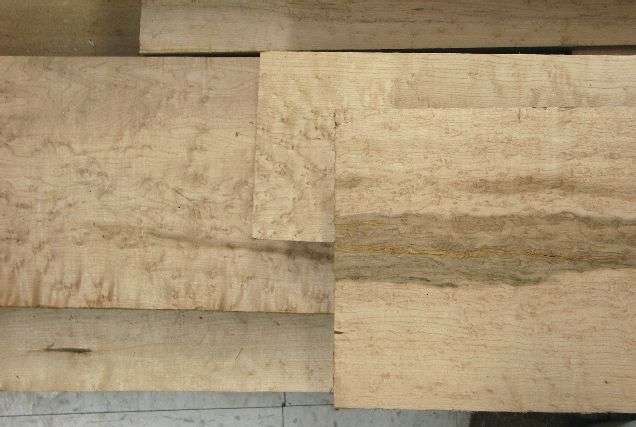
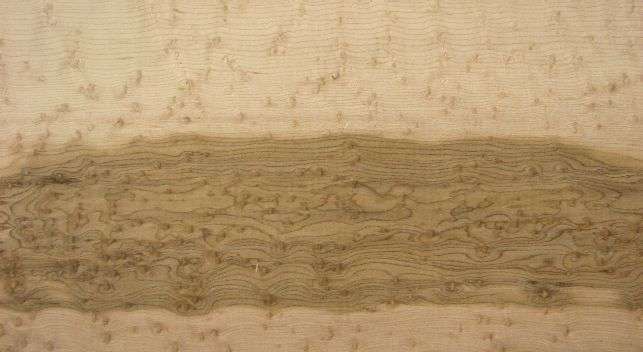
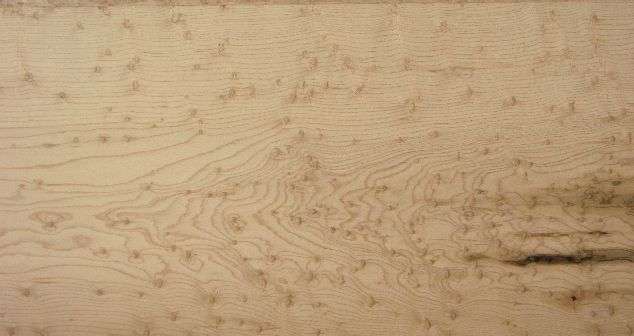
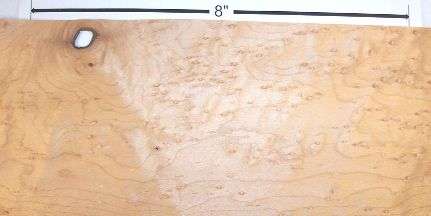
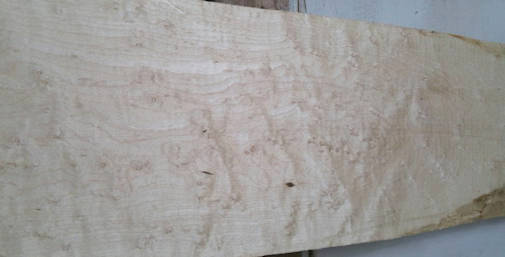
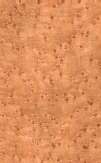
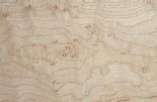
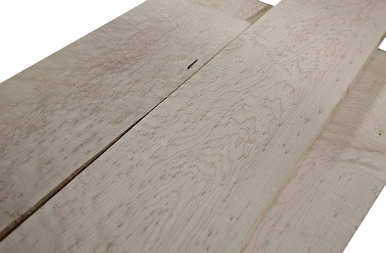
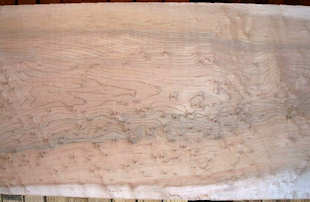
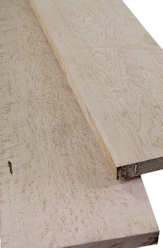
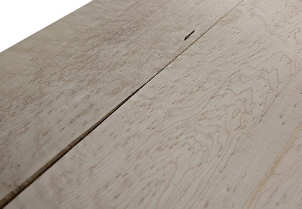
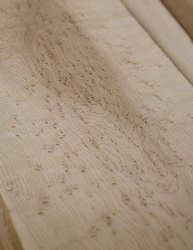
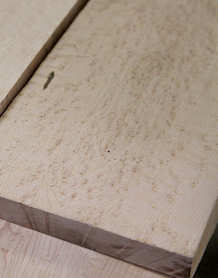
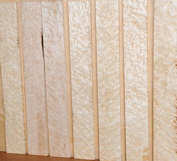
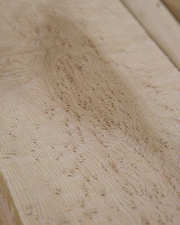
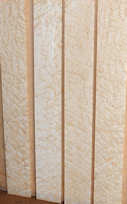
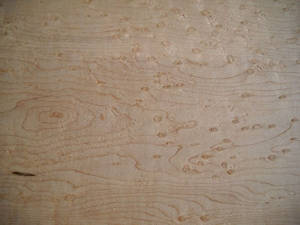
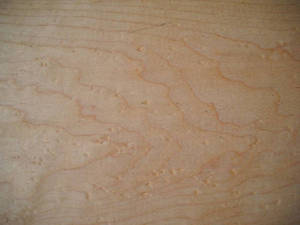
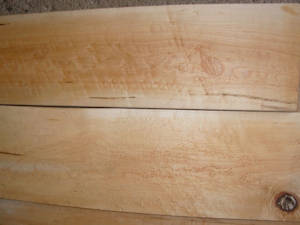
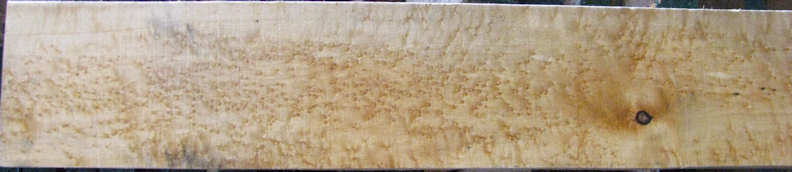
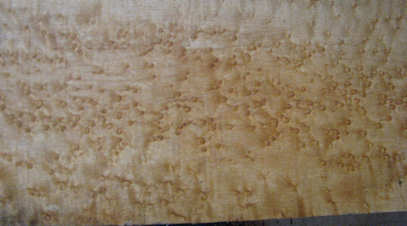
These first 3 pics were taken at a lumber yard and represent a nice diversity of the species and also show the mineral stain that is quite common in all hard maple, bird's eye figure or otherwise. These planks all had a reasonable amount of eye figure --- there were other planks that had much less and you'll see examples of such down below.
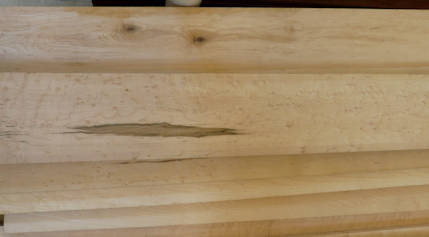
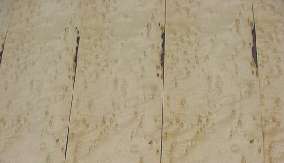
planks shot at a lumber yard, showing a rather poor density of eyes
very small plank
very small plank (flooring maybe? seems a bit thin) and end grain
end grain closeup and END GRAIN UPDATE of the piece directly above.
both sides of a sample plank of birdseye maple, almost certainly Acer saccharum since it's 47 lbs/cuft, contributed to the site by Rob Mathison whom I thank for this and other contributions. For both these pics and the ones below, HUGE enlargements are present. Everything about this plank says to me that it is clearly hard maple. The figure, the weight (47 lbs/cuft), and the exact match with other bird's eye planks I have in hard maple all point that way. None the less, Rob works for a miller and he tells me that this is definitely soft maple.
end grain and end grain closeup of the piece directly above
bird's eye soft maple piece contributed to the site by Rob Mathison whom I thank for this and other contributions to the site.
bird's eye soft maple piece contributed to the site by Rob Mathison whom I thank for this and other contributions to the site.
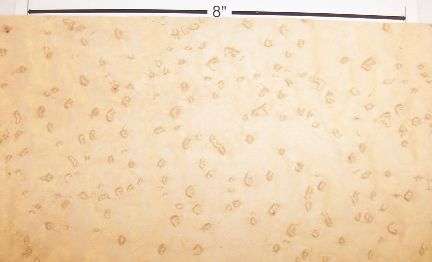
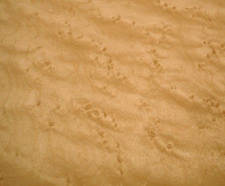
veneer with eyes that are almost holes in the wood --- usually the eyes are just a tight localized swirl pattern in the wood, but these are mechanically distinguishable by touch from the surrounding wood
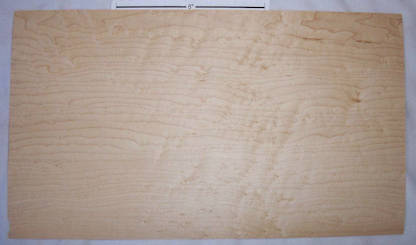
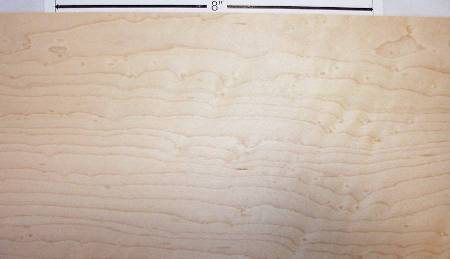
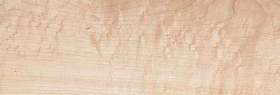
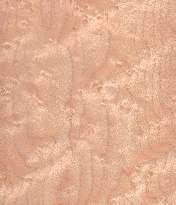
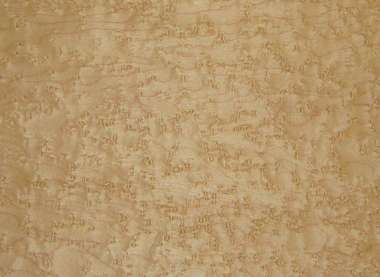
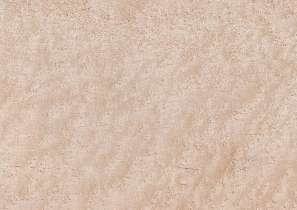
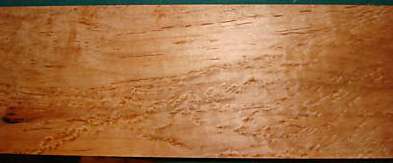
veneer with a small amount of curl to it
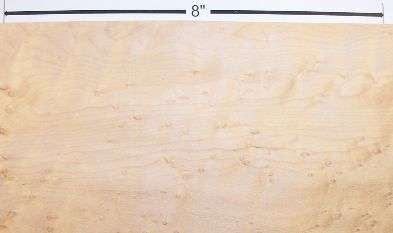
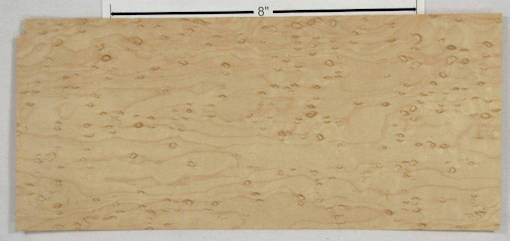
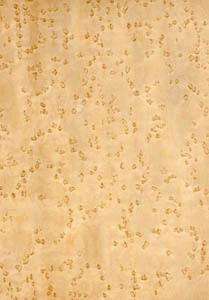
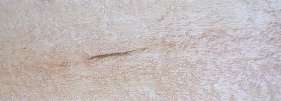
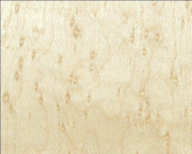
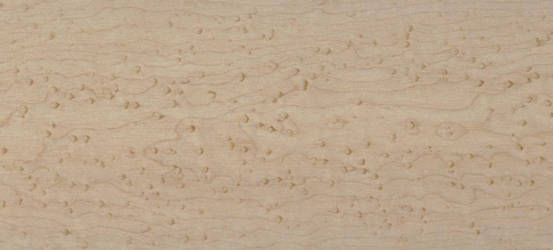
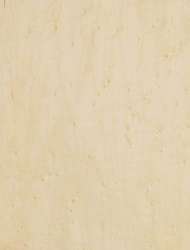
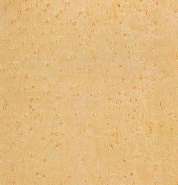
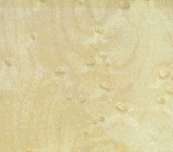
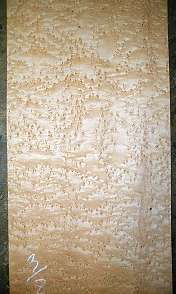
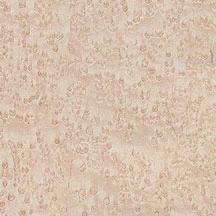
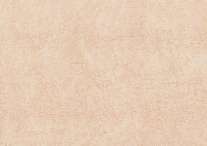
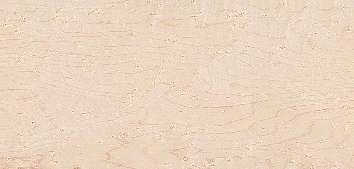
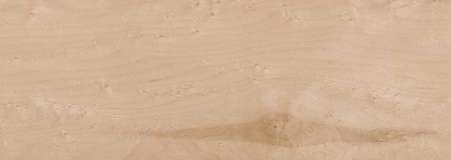
pale veneer with very sparse eyes
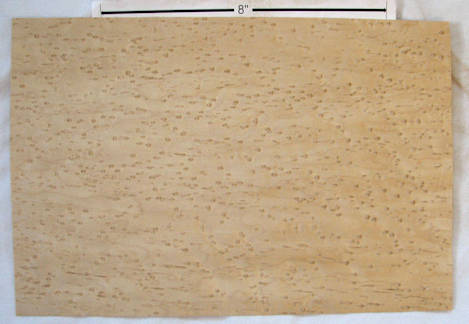
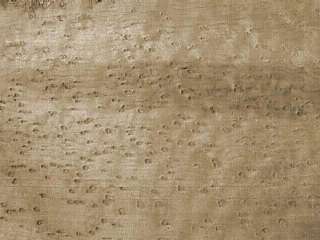
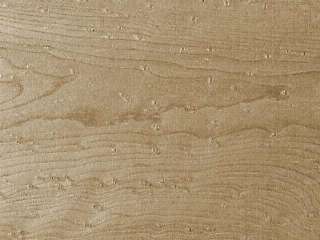
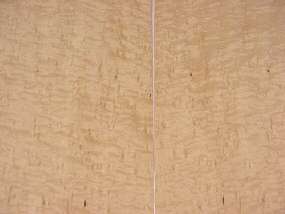
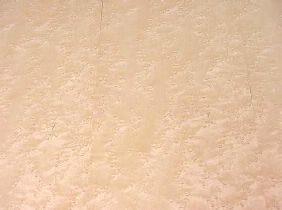
veneer sheet and closeup --- an excellent example of the kind of sparse-eye sheet that you will get from some vendors, who make no distinction between this very poor quality "birdseye" and the "real thing". Technically, this is certainly bird's eye maple, but it should be designated as a "sparse-eye" variety.
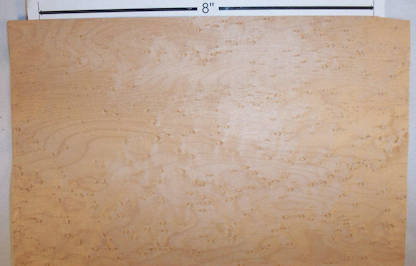
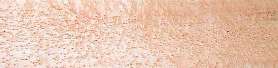
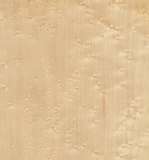
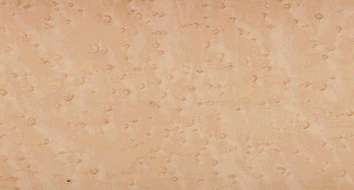
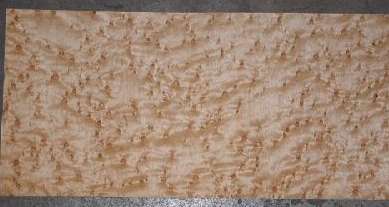
veneer with fairly average distribution of eyes
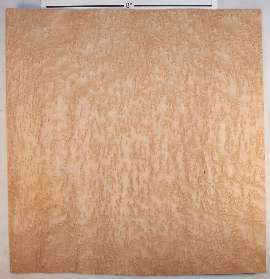
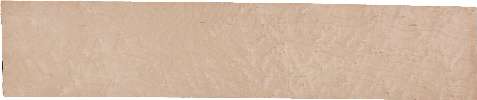
veneer
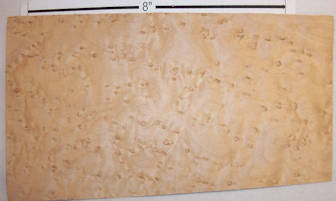
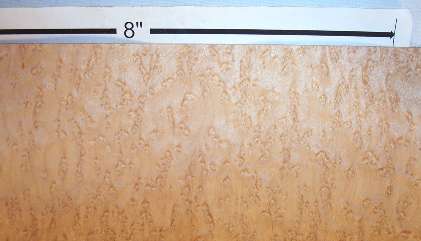
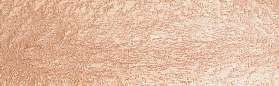
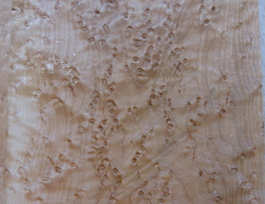
veneer sheet and closeup --- this one has a very dense eye pattern and demonstrates what vendors SHOULD mean when they say "dense eyes" (what they really sell, however, is frequently a very sparse pattern of eyes, nothing like this dense pattern). Bird's eye maple just doesn't GET much better than this piece. The color of the wood is slightly less pink that what shows here.
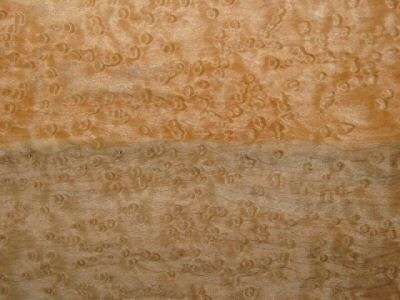
veneer with pretty heavy eyes --- the slight green tint isn't really present in the wood
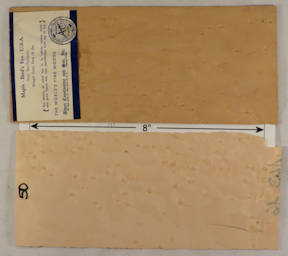
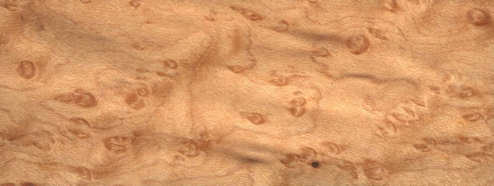
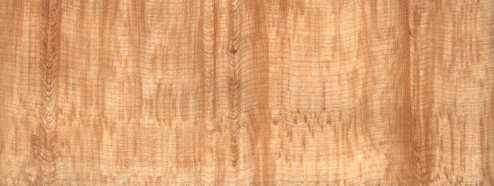
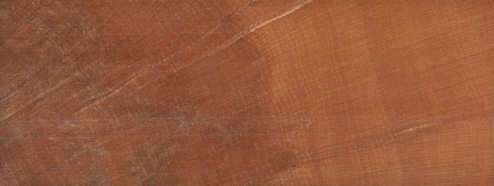
bird's eye maple veneer --- HUGE enlargements are present. This part of a collection which is discussed here: COLLECTION D. Clearly the older piece has an age patina.
flat cut, quartersawn, end grain
sugar maple (Acer saccharinum, also listed as pin maple) with bird's eye figure from The Wood Book --- one level of enlargement is available for each of the 3 views
web pics:
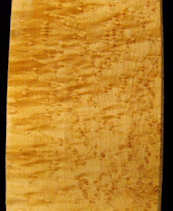
many of the colors are highly suspect; this wood tends to have the colors shown in my samples
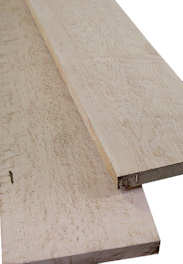
birdseye maple slab with fairly low eye density
planks
plank and closeup --- BIG enlargements are present
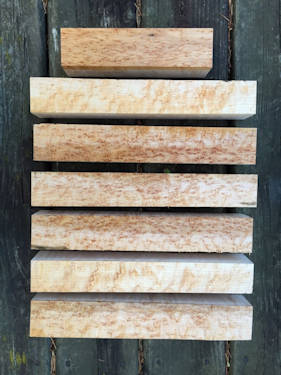
bird'e eye maple planks and turning stock specifically listed as hard maple / Acer saccharum
plank, shown on the left as it appeared on the web and on the right after I spent ONE SECOND hitting the "correct white balance" button in my graphics program. This is the kind of internet crap that made me start this site in the first place. I don't know that my corrected image is totally accurate, but I know for sure that it is MUCH more accurate than what I found posted.
planks listed as "figured" bigleaf maple, but they are clearly birdseye (with a bit of curl)
curly planks
veneer
veneer, all from the same vendor
veneer sheet closeups with both levels of enlargement available --- these are from the same vendor as the lot directly above
quilted veneer
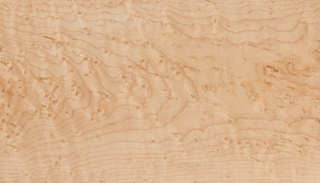
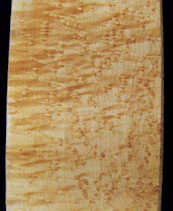
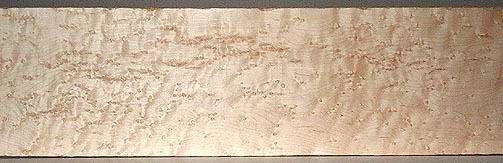
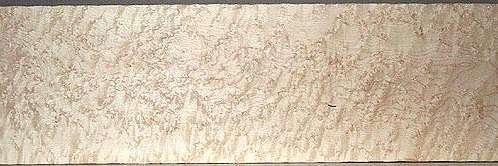
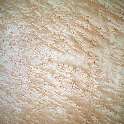
veneer sheets showing a nice density and distribution of eyes
veneer showing a mineral stain (a common flaw in all kinds of maple)
red maple with birds eye
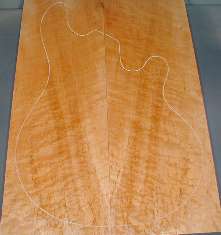
guitar back blank
bowl blanks listed as Acer saccharum
dowel listed as Acer saccharum
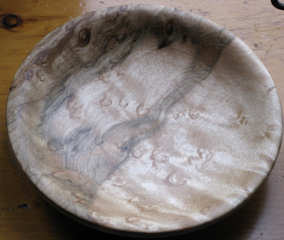
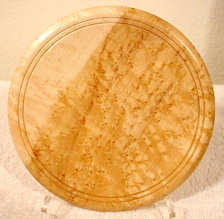
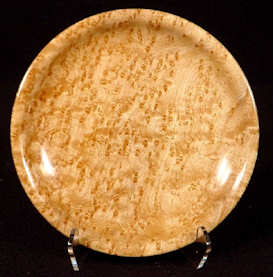
bowl
bowls by Bryan Nelson (NelsonWood)
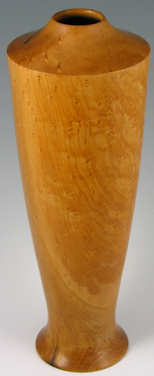
vase --- the color is quite possibly correct since most finishing agents cause a yellowing in maple that produces this color
%201a%20s25%20plh.jpg)
%201b%20s25%20plh.jpg)
%201%20end%20grain%20s25%20plh.jpg)
%201%20end%20grain%20closeup%20s25%20plh.jpg)
%201%20end%20grain%20closeup%202%20s25%20plh.jpg)
%201%20quartersawn%20surface%20s25%20plh.jpg)
%202a%20s25%20plh.jpg)
%202b%20s25%20plh.jpg)
%202%20end%20grain%20s25%20plh.jpg)
%202%20end%20grain%20closeup%20s25%20plh.jpg)
%202%20end%20grain%20closeup%202%20s25%20plh.jpg)
%201a%20s25%20plh.jpg)
%201b%20s25%20plh.jpg)
%202a%20s25%20plh.jpg)
%202b%20s25%20plh.jpg)
%202%20end%20grain%20s25%20plh.jpg)
%202%20end%20grain%20closeup%202%20s25%20plh.jpg)
%203a%20s25%20plh.jpg)
%203b%20s25%20plh.jpg)
%203%20end%20grain%20s25%20plh.jpg)
%203%20end%20grain%20closeup%202%20s25%20plh.jpg)
%20s50%20web.jpg)
%20s50%20web.jpg)
%20s50%20web.jpg)
%20s50%20web.jpg)
%20s50%20web.jpg)
%20web.jpg)
%20s50%20web.jpg)
%20s50%20web.jpg)
%20s50%20web.jpg)
%20s50%20web.jpg)
%20s50%20web.jpg)

%20veneer%201%20s25%20web.jpg)
%20bowl%20blanks%20s50%20web.jpg)
%20dowel%201%20s50%20web.jpg)